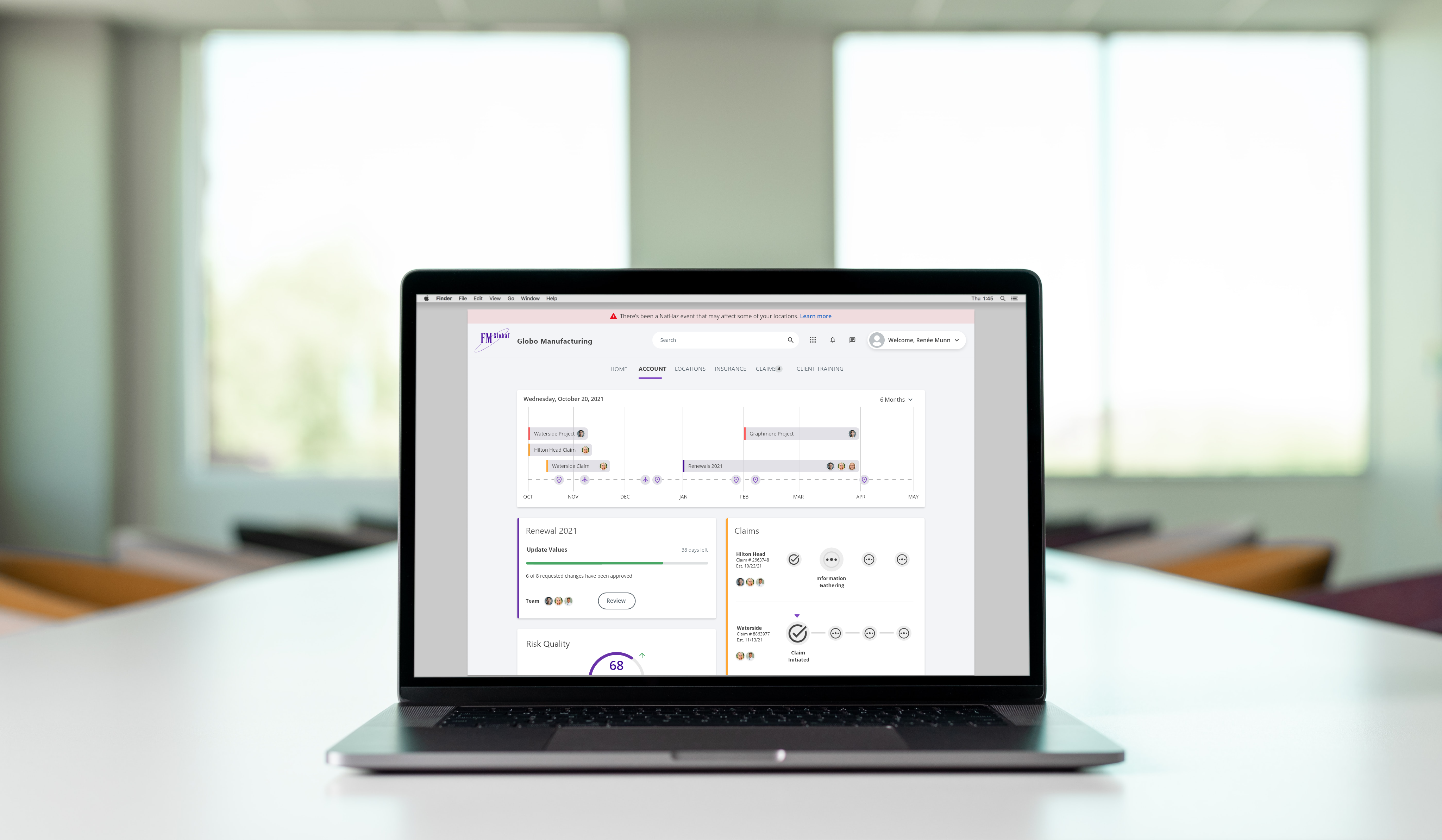
A client portal
nobody used —
and what we
built instead
120 conversations. One question: what do Risk Managers actually need?
FM Global had a client portal. Nobody used it.
FM Global is a Fortune 500 commercial property insurer operating on the belief that most loss is preventable. They had a digital portal for clients. The problem was adoption was critically low — Risk Managers weren't engaging with it.
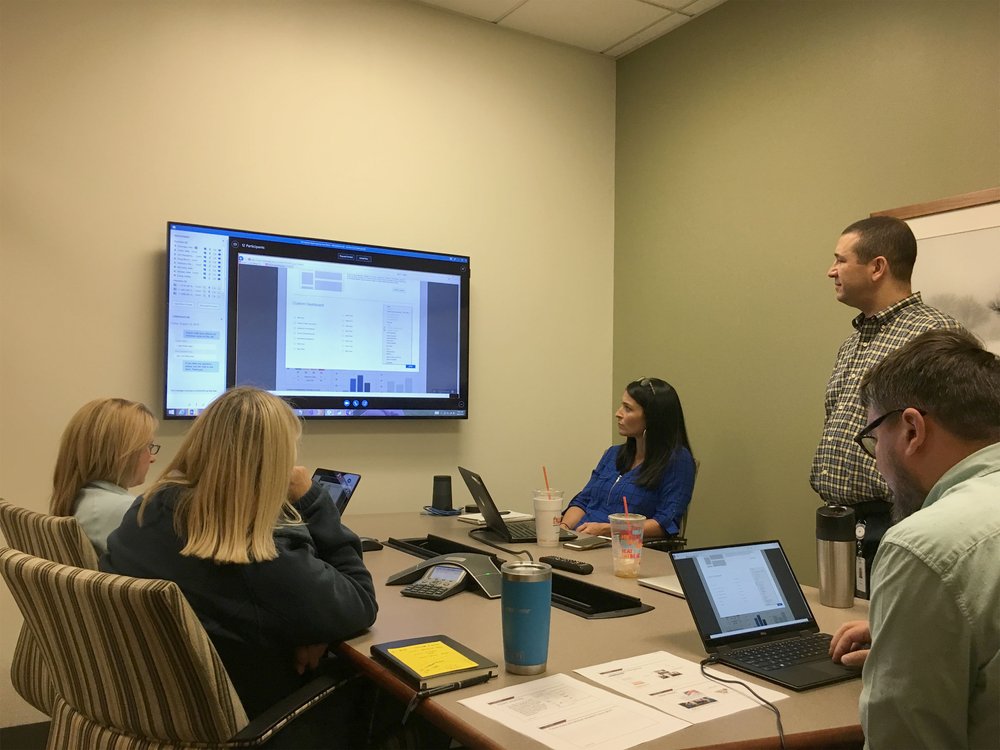
Before we could build something better, we needed to understand why. So we asked. A lot. 24 subject matter expert interviews. 19 Risk Manager interviews. 44 client calls. 33 internal calls.
We didn't guess — we listened. 120 conversations that changed everything.
Off the old system. Onto something worth keeping.
The existing client portal was sunsetting and migration was non-negotiable. It was also the wrong product to port forward — adoption had been low for years, and FM Global's internal digital transformation had only been turned inward until then. The deadline was a forcing function. The opportunity was bigger than the deadline implied: instead of moving clients onto a clone of what they weren't using, we'd use the migration to design a client vision worth keeping. The business had a direction in mind. Through research, testing, and an evidence-based case, we got them to a different one.
Lead Designer · FM Global
Observe, Reflect, Make
Design Thinking isn't a process — it's a framework. Three modes the team worked from at every stage, from the first round of interviews through the iterative cycles that defined the back half of the project.
In practice these three didn't run in sequence. Observation kept happening once we were making, and what we made kept reshaping what we'd already reflected on.
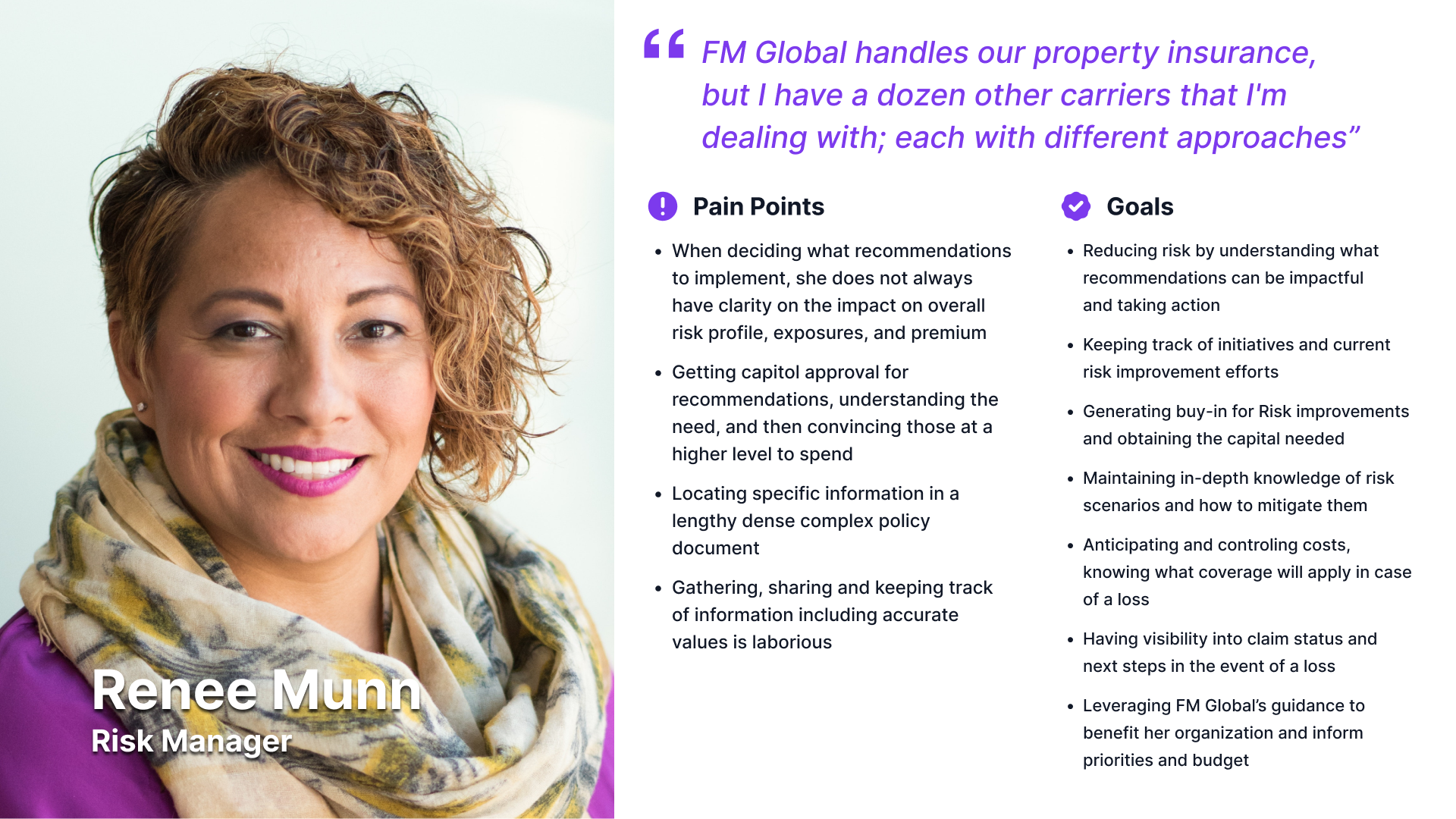
The work started by listening. We ran 43 interviews — Risk Managers on the client side, SMEs and engineering specialists on FM's. We mapped the Risk Manager journey end to end, surfaced pain points, and built three personas anchored on Renee, the archetype whose daily reality the project would have to earn.
Two themes kept surfacing. Risk Managers needed to know what was important and why — they were drowning in recommendations and had no way to triage them. And once they knew what mattered, they still needed to sell it upward — building the case to leadership for the budget to act. Both themes became the design principles that structured everything that came after.
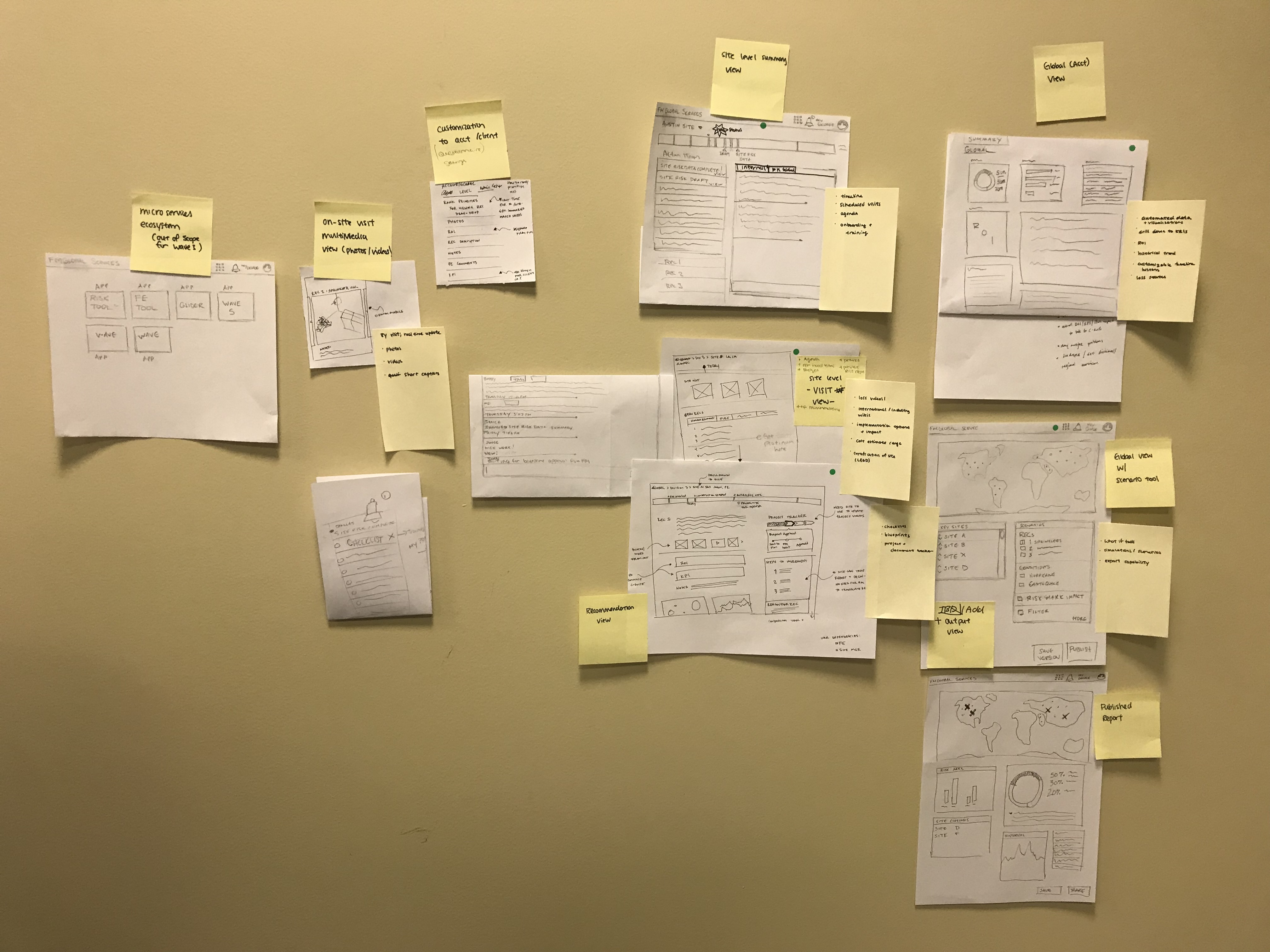
Research turned into vision through workshops with clients and stakeholders. Two weeks of divergent ideation — sketching, pushing ideas further than felt comfortable, then running a feasibility pass with the business and engineering to bring it back to what could actually ship. The point wasn't to land on the right answer fast. The point was to make sure the right answer was on the table at all.
This is where the reframe happened. The business had been working with outside consultants who'd set an initial direction: get off the old platform, port the existing experience forward, modernize lightly. My design partner and I agreed with the migration. The rest, we'd come back to. As the research progressed, we became the team's voice on what Risk Managers needed — I was new to FM and new to insurance, but the user research was the same craft. The direction shifted as our understanding sharpened. The research and the concept testing made the case for a client vision organized around the two themes that kept surfacing in the work. We weren't redesigning a portal. We were redesigning the work clients did with FM.
The back half of the project ran on rhythm. Three-week feedback cycles. 44 client conversations and 33 internal calls between May and August. Every month we sent Research Playbacks — decks that paired the design changes with the feedback that drove them. They kept leadership in the loop on ideas we were pushing and understanding we were earning, which is how we built the trust we needed when scope decisions got hard.
Scoping the MVP was the hardest part. The question wasn't just what to cut. It was how to ship a base experience that could carry weight as it scaled. My design partner and I worked closely with the Product Owner and Solution Architect, balancing what users needed with what could ship given engineering dependencies, unstructured data, and security requirements that stretched well beyond the design team. We didn't get everything we wanted into the MVP. We got the right things in.
The vision shipped in 2019. Before, clients struggled to access the old portal and would route questions to FM's Client Service Team, who'd manually retrieve what the software couldn't surface. FM is a white-glove operation; the team would do anything for a client. The portal we shipped didn't replace that service — it freed it to do higher-value work instead of being the workaround for software that didn't work. The platform has been scaling since.
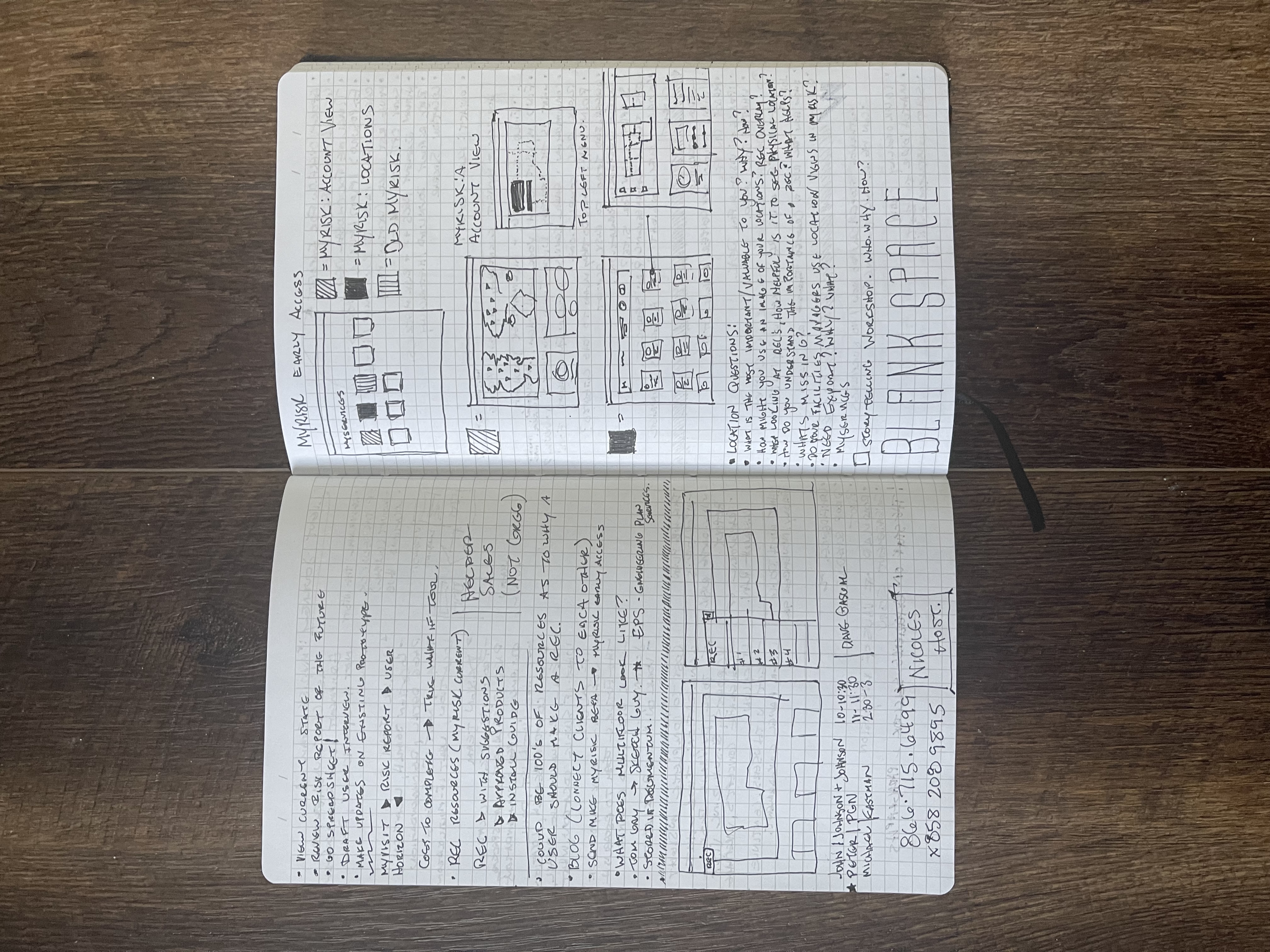
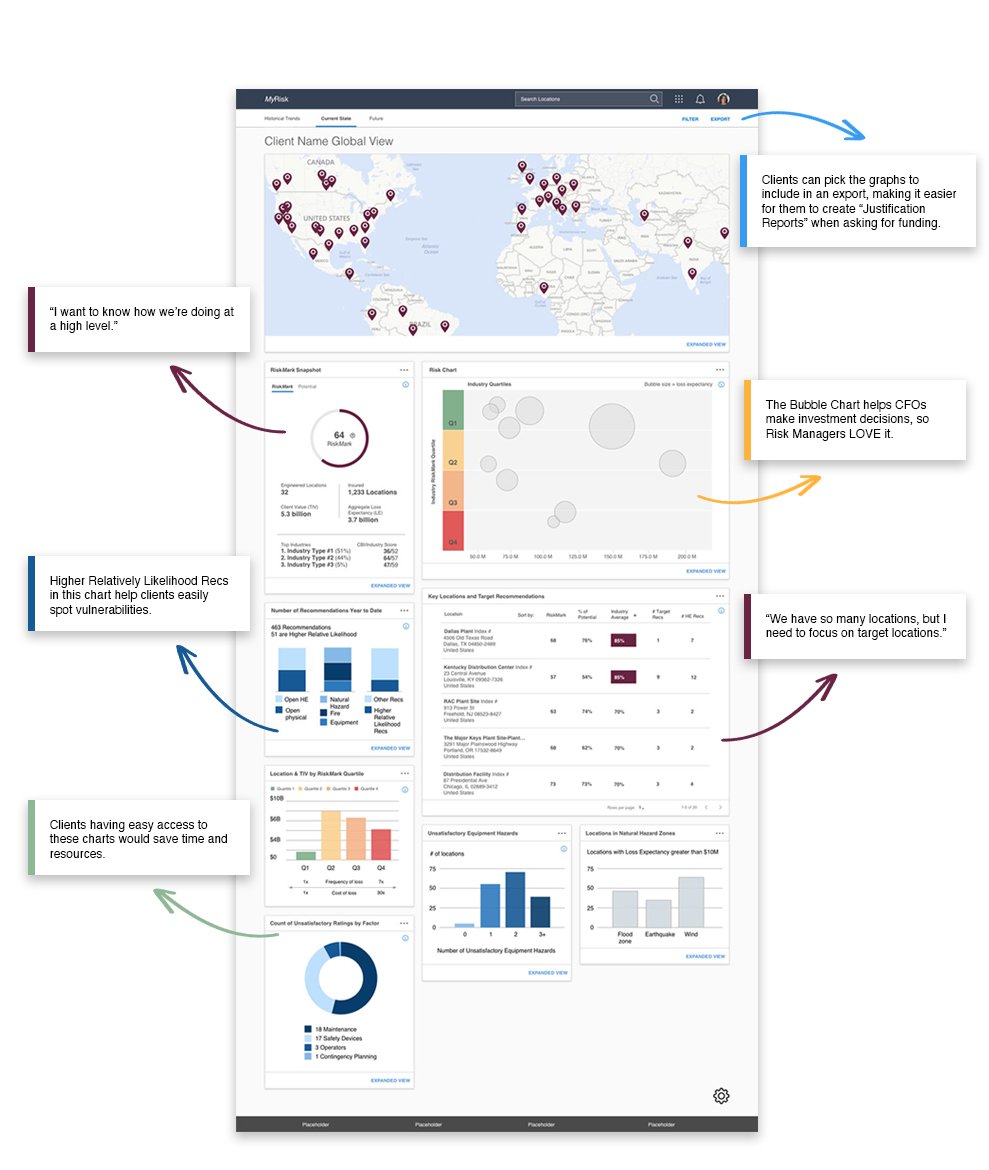
We didn't guess. We listened.
Before a single pixel was designed, we built a foundation of real conversations with the people whose work depended on getting this right.
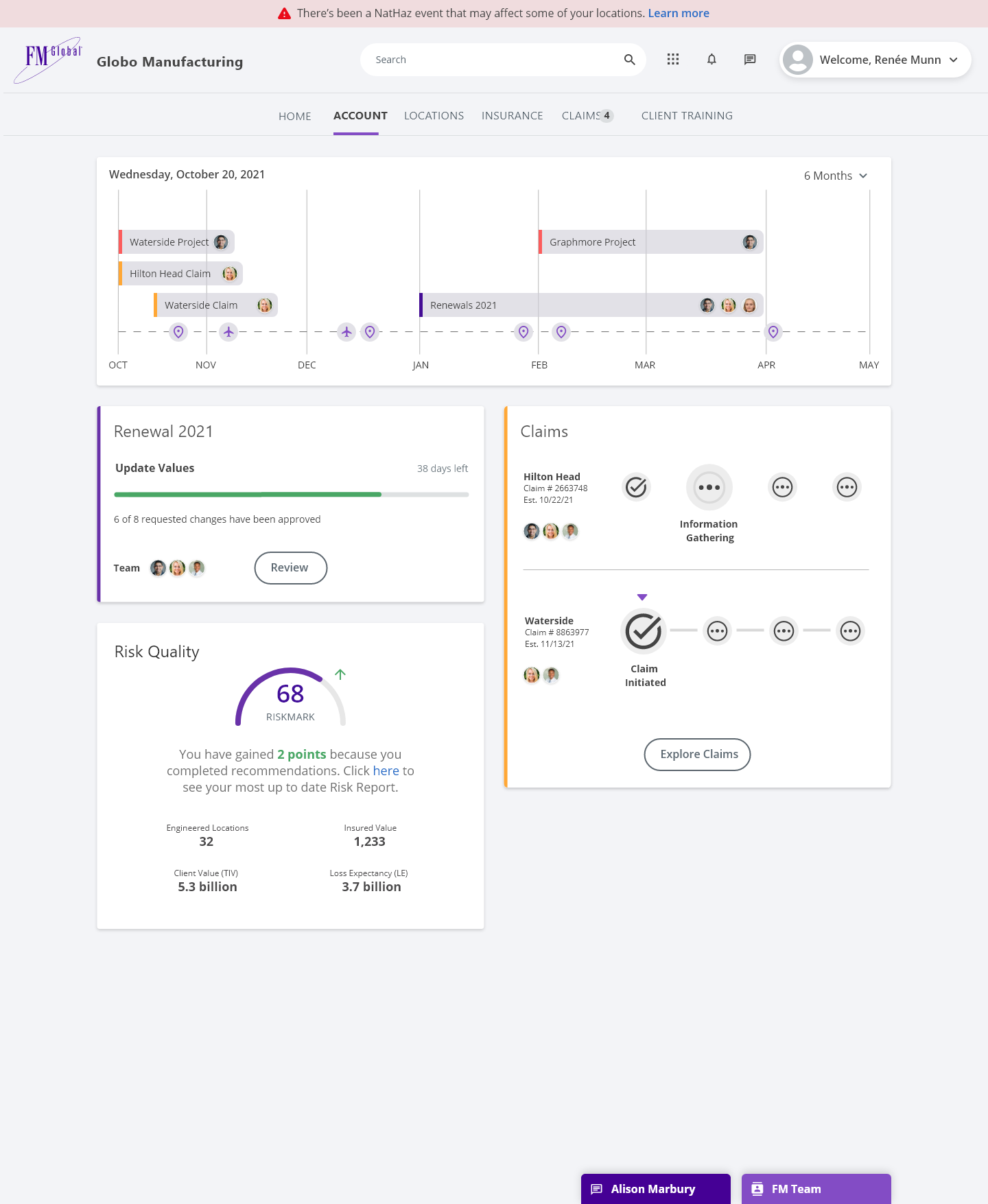
Since the MVP.
After the MVP shipped, I worked across several teams on the longer roadmap, then moved into design strategy as FM invested more in its digital capabilities. For the last three years I've been on Polaris, a field engineering tool that lets our 1,500 field engineers capture site-visit data and turn it into risk-improvement recommendations for clients.
FM has taught me that to get people to meet you where you are, you have to meet them where they are. It's a 200-year-old company that cares deeply about its clients — and that sometimes means everything else, digital included, has to wait. The experiences here are better than they were, and the partnerships I've built have been a big part of how.
We didn't just redesign a portal. We turned the transformation outward.
Clients began engaging with the new tool and new features kept shipping. The work helped pull FM's digital investment outward — toward a platform built to speed delivery of client-facing software across the business.